 173 views
E-max Crown or Zirconia Crown: How to Choose the Right Option
Don't know
where to start ?
Find the right specialist with the best price guarantee
Match the Crown Material to Your Bite, Tooth Location, and Aesthetic Goals
Choosing between E-max and zirconia is less about which material is "better" and more about what your tooth needs to handle every day.
Start with your bite forces.If you clench or grind, or you have a heavy bite, your dentist may lean toward zirconia because it is often selected for durability under higher load. E-max can still work in some cases, but it may require more careful case selection.
Next, consider where the crown sits.
- Front teeth:E-max is commonly chosen when the priority is a lifelike look, especially for a single visible tooth.
- Back teeth:Zirconia is frequently used for molars and premolars where chewing pressure is higher.
Finally, define your cosmetic goal.If you want the most natural translucency, E-max is often favored. If you want a strong, uniform result (including for bridges), zirconia may be a better fit. Your dentist can confirm what is realistic based on tooth shape, remaining structure, and shade matching.
HealRoad can help you compare clinic recommendations in Turkey and understand why a dentist suggests E-max vs zirconia for your specific tooth.
Match the Crown Material to Your Bite, Tooth Location, and Aesthetic Goals
Choosing between E-max and zirconia is less about which material is "better" and more about what your tooth needs to handle every day.
Start with your bite forces.If you clench or grind, or you have a heavy bite, your dentist may lean toward zirconia because it is often selected for durability under higher load. E-max can still work in some cases, but it may require more careful case selection.
Next, consider where the crown sits.
- Front teeth:E-max is commonly chosen when the priority is a lifelike look, especially for a single visible tooth.
- Back teeth:Zirconia is frequently used for molars and premolars where chewing pressure is higher.
Finally, define your cosmetic goal.If you want the most natural translucency, E-max is often favored. If you want a strong, uniform result (including for bridges), zirconia may be a better fit. Your dentist can confirm what is realistic based on tooth shape, remaining structure, and shade matching.
HealRoad can help you compare clinic recommendations in Turkey and understand why a dentist suggests E-max vs zirconia for your specific tooth.
E-max vs Zirconia in Plain Terms: Strength, Translucency, and Tooth Prep Tradeoffs
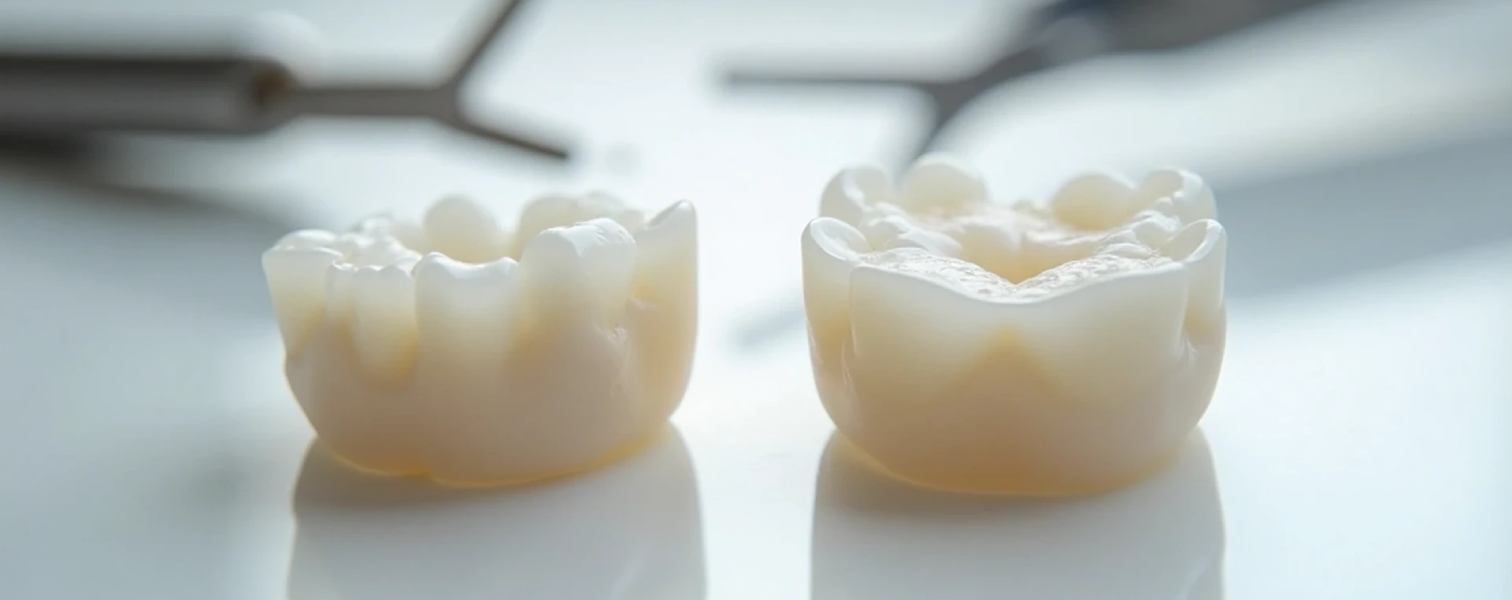
Think of E-max and zirconia as two different priorities:E-max leans toward a more natural light effect, while zirconia leans toward durability.
Strength (chewing and wear):Zirconia is often chosen for back teeth, heavy bite forces, or patients who clench or grind (especially if a night guard is part of the plan). E-max can still be strong, but it is typically selected when extreme force is less of a concern.
Translucency (how it looks in real light):E-max tends to mimic enamel more easily, which can help front teeth blend in. Zirconia can look very natural too, but shade matching and layering choices matter more, especially for very bright or very thin teeth.
Tooth preparation (how much tooth is shaped):The amount removed depends on your bite, existing fillings, and the crown design. In some cases, E-max may need slightly more room for esthetics, while zirconia may allow a thinner crown. Your dentist should explain the minimum reduction needed for your specific tooth.
If you are comparing options across clinics in Turkey, HealRoad can help you review crown materials and prep plans side by side and clarify questions before you commit.
E-max vs Zirconia in Plain Terms: Strength, Translucency, and Tooth Prep Tradeoffs
Think of E-max and zirconia as two different priorities:E-max leans toward a more natural light effect, while zirconia leans toward durability.
Strength (chewing and wear):Zirconia is often chosen for back teeth, heavy bite forces, or patients who clench or grind (especially if a night guard is part of the plan). E-max can still be strong, but it is typically selected when extreme force is less of a concern.
Translucency (how it looks in real light):E-max tends to mimic enamel more easily, which can help front teeth blend in. Zirconia can look very natural too, but shade matching and layering choices matter more, especially for very bright or very thin teeth.
Tooth preparation (how much tooth is shaped):The amount removed depends on your bite, existing fillings, and the crown design. In some cases, E-max may need slightly more room for esthetics, while zirconia may allow a thinner crown. Your dentist should explain the minimum reduction needed for your specific tooth.
If you are comparing options across clinics in Turkey, HealRoad can help you review crown materials and prep plans side by side and clarify questions before you commit.

Questions to Ask Your Dentist Before You Commit to Either Option
Before choosing E-max or zirconia, ask for a clear explanation of what your tooth needs and why. These questions can help you compare options in a practical way:
- Where is the tooth and how much bite force does it take?
Front teeth and back teeth often have different priorities.
- How much natural tooth will be removed?
Ask what preparation is planned and whether a more conservative approach is possible.
- Do I need a build-up or post first?
The foundation under the crown can affect durability and cost.
- What shade and translucency can you realistically match?
If you have neighboring teeth, ask how the crown will blend in different lighting.
- How will you check my bite and grinding habits?
Discuss night guards or bite adjustments if you clench or grind.
- What is the plan if the crown chips, loosens, or the gum line changes?
Ask about repair vs replacement and follow-up visits.
Also confirm the lab workflow (digital scan vs impression), expected number of appointments, and what is included in the quote.
If you are comparing clinics in Turkey, HealRoad can help you organize these questions and review answers side by side so you can plan with more confidence.
Questions to Ask Your Dentist Before You Commit to Either Option
Before choosing E-max or zirconia, ask for a clear explanation of what your tooth needs and why. These questions can help you compare options in a practical way:
- Where is the tooth and how much bite force does it take?
Front teeth and back teeth often have different priorities.
- How much natural tooth will be removed?
Ask what preparation is planned and whether a more conservative approach is possible.
- Do I need a build-up or post first?
The foundation under the crown can affect durability and cost.
- What shade and translucency can you realistically match?
If you have neighboring teeth, ask how the crown will blend in different lighting.
- How will you check my bite and grinding habits?
Discuss night guards or bite adjustments if you clench or grind.
- What is the plan if the crown chips, loosens, or the gum line changes?
Ask about repair vs replacement and follow-up visits.
Also confirm the lab workflow (digital scan vs impression), expected number of appointments, and what is included in the quote.
If you are comparing clinics in Turkey, HealRoad can help you organize these questions and review answers side by side so you can plan with more confidence.
Review my plan before I commit
Get help comparing quotes and clarifying what is included.
Reading Treatment Plans and Quotes: Spotting Red Flags, Add Ons, and Better Alternatives
Crown quotes can look similar on paper, yet include very different steps and materials. Before you choose E-max or zirconia, make sure you understand what is actually being provided.
Items to confirm in writing
- Tooth location and goal: Is the crown for a front tooth (appearance) or a back tooth (strength)? This often drives the material choice.
- Tooth preparation details: Ask if a build-up, post, or root canal is expected. These can change cost and timeline.
- Lab and material specifics: "Zirconia" can mean different types; "E-max" should specify the brand and whether it is layered or monolithic.
- Temporary crown and cement: Confirm whether a temporary is included and what cement is planned, especially if you have sensitivity.
- Occlusion and grinding plan:If you clench or grind, ask how bite adjustment and a night guard are handled.
Potential red flags: Vague material names, missing steps (impressions, try-in, bite check), or pressure to crown multiple teeth without a clear reason. If your case is borderline, ask whether an onlay, veneer, or whitening could meet your goals with less tooth reduction.
HealRoad can help you compare clinics in Turkey using clear, itemized information and support you with questions while you plan.
Reading Treatment Plans and Quotes: Spotting Red Flags, Add Ons, and Better Alternatives
Crown quotes can look similar on paper, yet include very different steps and materials. Before you choose E-max or zirconia, make sure you understand what is actually being provided.
Items to confirm in writing
- Tooth location and goal: Is the crown for a front tooth (appearance) or a back tooth (strength)? This often drives the material choice.
- Tooth preparation details: Ask if a build-up, post, or root canal is expected. These can change cost and timeline.
- Lab and material specifics: "Zirconia" can mean different types; "E-max" should specify the brand and whether it is layered or monolithic.
- Temporary crown and cement: Confirm whether a temporary is included and what cement is planned, especially if you have sensitivity.
- Occlusion and grinding plan:If you clench or grind, ask how bite adjustment and a night guard are handled.
Potential red flags: Vague material names, missing steps (impressions, try-in, bite check), or pressure to crown multiple teeth without a clear reason. If your case is borderline, ask whether an onlay, veneer, or whitening could meet your goals with less tooth reduction.
HealRoad can help you compare clinics in Turkey using clear, itemized information and support you with questions while you plan.
Review my plan before I commit
Get help comparing quotes and clarifying what is included.
Conclusion
E-max is often chosen when lifelike appearance is the top priority, especially for front teeth, while zirconia is frequently chosen when strength and durability under heavy biting forces matter most, especially for back teeth or for people who clench or grind. Many patients are good candidates for either material, and the deciding factors are usually tooth location, bite forces, remaining tooth structure, and cosmetic expectations. Ask your dentist which material best fits your specific tooth and whether you need added protection like a night guard if you grind your teeth.
References


- Dental treatments (including crowns) - NHS
- Clinical Survival of Reduced-Thickness Monolithic Lithium-Disilicate Crowns: A 3-Year Randomized Controlled Trial - PMC
- CONCLUSIONS AND IMPLICATIONS FOR DECISION OR POLICY MAKING - Porcelain-Fused-to-Metal Crowns versus All-Ceramic Crowns: A Review of the Clinical and Cost-Effectiveness - NCBI Bookshelf
- Zirkonyum Destekli Seramik Kron-Köprü Restorasyonları (PDF) - Erzincan Ağız ve Diş Sağlığı Eğitim Araştırma Hastanesi (saglik.gov.tr)
- Sailer I, Makarov NA, Thoma DS, Zwahlen M, Pjetursson BE. All-ceramic or metal-ceramic tooth-supported fixed dental prostheses (FDPs)? A systematic review of the survival and complication rates. Part I: Single crowns. Dental Materials. 2015.
Article Contributors

Heal Road Medical Reviewer
Medical Reviewer

Heal Road Writer
Writer
- Views
- 173 views
- Reading Time
- Last Updated