
Discover, Heal, Thrive:
HealRoad Articles
Welcome to HealRoad Articles
Explore insights into world-class healthcare and the beauty of Türkiye. From expert tips on treatments to travel guides, our articles are your companion on the journey to wellness and discovery.
139 articles found
More filters


Topic
Intent
Journey Stage
Concern
Travel Context
How Most Patients Choose the Wrong Clinic in Türkiye (And How to Choose the Right One)
Choosing a clinic in Türkiye can feel easier than it actually is.
You open a few websites, scroll through social media, read some reviews and quickly start forming an opinion.
Some clinics look more professional. Some feel more trustworthy. Some seem more popular.
And without realizing it, you start making a decision based on what you see.
But this is where many patients go wrong.
Because what looks convincing online does not always reflect what is right for your treatment.
 4561 reading

5 Things to Check Before Booking a Clinic in Türkiye
Choosing a clinic in another country is a major decision, and the process can feel overwhelming at first. Many patients compare prices, reviews, or before-and-after photos, but these details alone are not always enough to understand the full picture. A safer and more confident decision usually comes from looking at the practical factors behind the offer, including who will perform the treatment, how clearly the plan is explained, and what kind of support is provided before and after the visit.
Türkiye has become one of the most searched destinations for dental and medical treatment, offering experienced clinicians, modern facilities, and competitive prices. Still, not every clinic is the right fit for every patient. Before confirming a booking, it is worth slowing down and checking a few essential details that can directly affect safety, comfort, and the overall treatment experience.

Regenera Activa: The stem-cell boost your hair transplant needs.
Regenera Activa is a non-surgical treatment that uses a small sample of your own scalp tissue to create a cell-rich solution, which is then injected into areas of thinning hair. It is often discussed alongside hair transplantation because the goal is different: a transplant moves healthy follicles, while Regenera Activa aims to support existing miniaturizing hairs and improve scalp conditions around them.
For some people, that makes it a useful add-on rather than a replacement. It may be offered before a transplant to stabilize ongoing hair loss, or after a transplant to support the appearance of native hair around the grafted area. Results vary, and the treatment is generally considered most suitable for early to moderate androgenetic hair loss rather than advanced baldness.
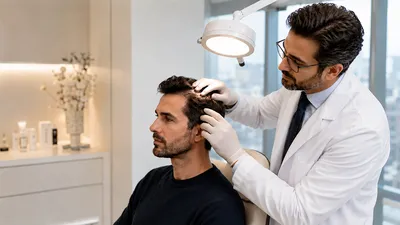
Natural-Looking Eyebrows: How to restore your brows permanently
Eyebrows frame the eyes, shape facial expression, and help balance the face. When brows become thin from overplucking, aging, scarring, or certain medical conditions, many people want a result that looks natural rather than sharply drawn on. Permanent eyebrow restoration usually means moving your own hair into the brow area with a hair transplant. When it is planned carefully, this can create fuller brows that grow, can be trimmed, and are designed to match your features.
This FAQ explains how permanent eyebrow restoration works, who may be a good candidate, what results to expect, and why the skill of the surgeon matters so much. It also covers limits, recovery, and the importance of checking for medical causes of eyebrow loss before treatment.

Can I Get a Hair Transplant Without Shaving My Head? The truth about "No-Shave" FUE
Yes, in some cases you can have a hair transplant without shaving your whole head. This is usually called a no-shave or unshaven FUE procedure. Instead of clipping the entire scalp, the surgeon may trim only a small donor area that can be hidden by surrounding hair, or leave the recipient area unshaven. For the right patient, this can make the procedure easier to keep private while reducing the dramatic short-term change in appearance.
That said, no-shave FUE is not a separate type of transplant and it is not suitable for everyone. It is still follicular unit extraction, with the same basic goals, limits, and healing process. The main difference is how much hair is trimmed to allow graft removal and placement. Whether it is possible depends on your hairstyle, hair length, donor density, the number of grafts needed, and your surgeon's technique.
The most important point is simple: no-shave does not mean no evidence of surgery. Tiny scabs, redness, and temporary shedding can still happen, and larger sessions are often harder to perform efficiently without some trimming. A good consultation should focus less on the label and more on what can realistically be achieved safely and naturally in your case.

Manual vs. Micromotor: Does the tool used for extraction change the final result?
In hair transplantation, grafts can be removed with a manual punch or with a motorized micromotor punch. Patients often assume the device itself determines the outcome, but the final result depends far more on planning, surgeon skill, graft handling, and whether the chosen punch matches the hair and scalp characteristics. In other words, the tool matters, but technique matters more.
Both methods are used in follicular unit extraction, or FUE. A manual punch is advanced by hand, while a micromotor rotates or oscillates the punch with mechanical assistance. Each approach has strengths and trade-offs in speed, control, and tissue handling. The key question is not which tool sounds more advanced, but which method is most appropriate for the individual case and is used well.
FUE vs. FUT: Why modern clinics have stopped using the "strip" method
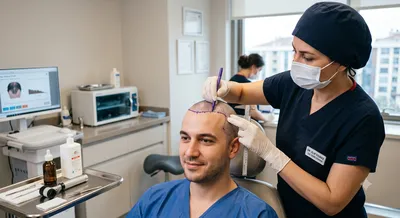
Fixing a Bad Hair Transplant: How Revision Surgery Can Restore a Natural Look
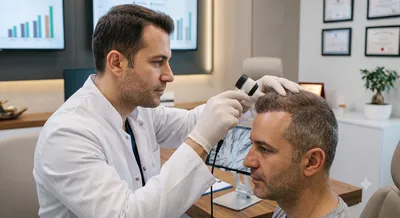
Fix Your Patchy Beard: The Permanent Solution for a Full, Masculine Look
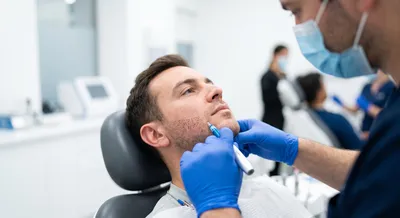
Pain-Free Hair Transplant: How Needle-Free Anesthesia Makes It Possible

Sapphire FUE vs. DHI: Which is the best hair transplant method for you?
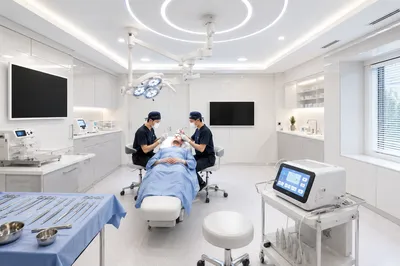
When Is the Best Time to Travel to Turkey for Dental Care?