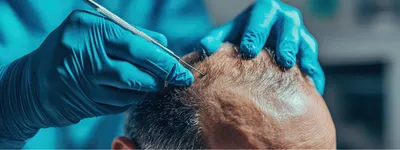

Can I Get a Hair Transplant Without Shaving My Head? The truth about "No-Shave" FUE
Yes, in some cases you can have a hair transplant without shaving your whole head. This is usually called a no-shave or unshaven FUE procedure. Instead of clipping the entire scalp, the surgeon may trim only a small donor area that can be hidden by surrounding hair, or leave the recipient area unshaven. For the right patient, this can make the procedure easier to keep private while reducing the dramatic short-term change in appearance.
That said, no-shave FUE is not a separate type of transplant and it is not suitable for everyone. It is still follicular unit extraction, with the same basic goals, limits, and healing process. The main difference is how much hair is trimmed to allow graft removal and placement. Whether it is possible depends on your hairstyle, hair length, donor density, the number of grafts needed, and your surgeon's technique.
The most important point is simple: no-shave does not mean no evidence of surgery. Tiny scabs, redness, and temporary shedding can still happen, and larger sessions are often harder to perform efficiently without some trimming. A good consultation should focus less on the label and more on what can realistically be achieved safely and naturally in your case.
- No-shave FUE usually means the whole head is not shaved, not that no hair is trimmed at all.
- It may be best suited to smaller sessions or patients with longer hair that can hide the donor area.
- It can take more time and may be technically more demanding than standard shaved FUE.
- You can still have redness, scabs, and shedding after surgery.
- Ask whether your surgeon plans a recipient-area no-shave, a partial donor shave, or a true unshaven extraction.
Don't know
where to start ?
Find the right specialist with the best price guarantee
Which Option Fits You?
Choose no-shave FUE if your priority is:
Choose a shaved approach if your priority is:
What a no-shave FUE hair transplant actually means
A "no-shave" FUE hair transplant usually does not mean that no hair is cut at all.
It generally means the surgeon avoids shaving the whole head and instead uses one of the following approaches:
- Trims only small hidden areas in the donor zone
- Selectively trims individual hairs that will be extracted and implanted
This approach can make the procedure easier to conceal during recovery, especially for people who wear their hair longer.
However, it is not suitable for everyone.
A no-shave FUE approach may have some limitations:
- It often takes longer
- It may limit the number of grafts that can be done in one session
- It can be technically more demanding
In some cases, partial shaving or full shaving gives better:
- Access
- Efficiency
- Graft quality
The best option depends on your hairstyle, hair characteristics, graft goals, and the surgeon's method.
What a no-shave FUE hair transplant actually means
A "no-shave" FUE hair transplant usually does not mean that no hair is cut at all.
It generally means the surgeon avoids shaving the whole head and instead uses one of the following approaches:
- Trims only small hidden areas in the donor zone
- Selectively trims individual hairs that will be extracted and implanted
This approach can make the procedure easier to conceal during recovery, especially for people who wear their hair longer.
However, it is not suitable for everyone.
A no-shave FUE approach may have some limitations:
- It often takes longer
- It may limit the number of grafts that can be done in one session
- It can be technically more demanding
In some cases, partial shaving or full shaving gives better:
- Access
- Efficiency
- Graft quality
The best option depends on your hairstyle, hair characteristics, graft goals, and the surgeon's method.
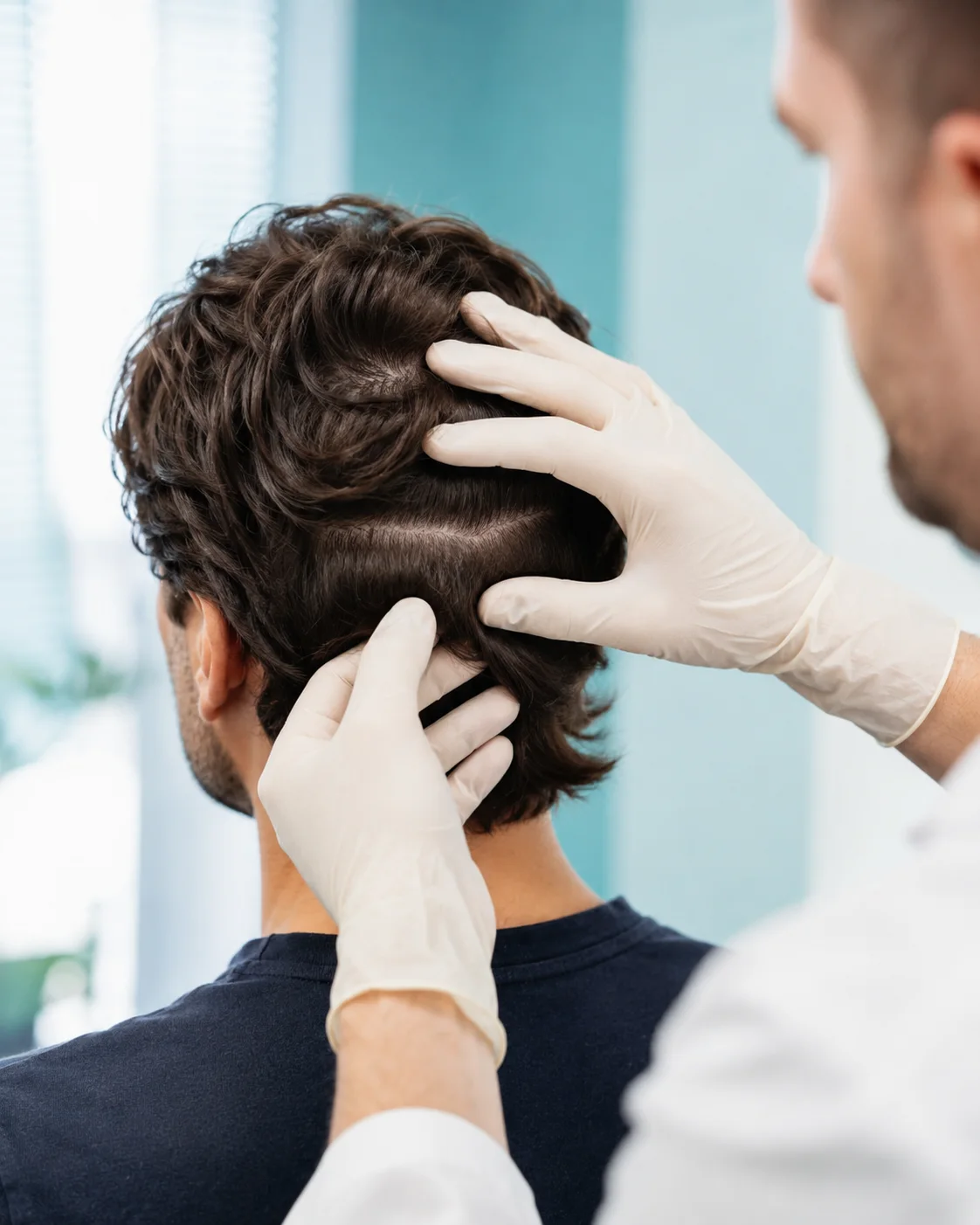
Who can get a hair transplant without shaving the whole head
Yes, some people can have a hair transplant without shaving the whole head.
However, this depends on several factors:
- The technique used
- The size of the procedure
- The hairstyle needed to hide the donor area while it heals
A so-called no-shave FUE usually means the surgeon trims only small hidden sections of the donor area instead of shaving the entire scalp. This can work well for people who:
- Need a smaller session, such as hairline refinement or limited thinning
- Have longer hair that can cover the trimmed donor patches
- Are willing to accept that the procedure may take longer and sometimes cost more
- Understand that not every surgeon offers it, and not every pattern of hair loss is suitable
It may be less practical if you need a large number of grafts, have very short hair, or if the donor area is limited and needs full visibility for efficient harvesting. In some cases, a partial shave is the best compromise between discretion and surgical access.
The key point is that no-shave does not mean no trimming at all. Most patients still need some donor hair clipped, just not the entire head.
Who can get a hair transplant without shaving the whole head
Yes, some people can have a hair transplant without shaving the whole head.
However, this depends on several factors:
- The technique used
- The size of the procedure
- The hairstyle needed to hide the donor area while it heals
A so-called no-shave FUE usually means the surgeon trims only small hidden sections of the donor area instead of shaving the entire scalp. This can work well for people who:
- Need a smaller session, such as hairline refinement or limited thinning
- Have longer hair that can cover the trimmed donor patches
- Are willing to accept that the procedure may take longer and sometimes cost more
- Understand that not every surgeon offers it, and not every pattern of hair loss is suitable
It may be less practical if you need a large number of grafts, have very short hair, or if the donor area is limited and needs full visibility for efficient harvesting. In some cases, a partial shave is the best compromise between discretion and surgical access.
The key point is that no-shave does not mean no trimming at all. Most patients still need some donor hair clipped, just not the entire head.
No-Shave FUE Timeline
What to expect during and after a no-shave FUE procedure
A no-shave FUE usually follows the same core steps as a standard FUE, but the surgeon works around your existing hair instead of clipping the whole area.
On the day of the procedure, the process typically includes:
- The scalp is cleaned.
- Local anesthetic is used.
- Individual follicular units are removed from a trimmed donor zone that can often be hidden by surrounding hair.
- The grafts are placed into the thinning or balding area.
The rest of your hair is usually left largely intact.
Because the hair is not fully shaved, the procedure can take longer and may be better suited to smaller sessions or carefully selected cases.
Afterward, you may experience:
- Mild redness
- Swelling
- Pinpoint scabs
- Some temporary shedding of transplanted hairs over the first few weeks
Most people can return to desk work within a few days, but you will still need to follow the same aftercare rules as regular FUE.
These usually include:
- Gentle washing
- Avoiding strenuous activity for a short period
- Protecting the scalp while it heals
The main benefit is discretion, not an easier recovery.
What to expect during and after a no-shave FUE procedure
A no-shave FUE usually follows the same core steps as a standard FUE, but the surgeon works around your existing hair instead of clipping the whole area.
On the day of the procedure, the process typically includes:
- The scalp is cleaned.
- Local anesthetic is used.
- Individual follicular units are removed from a trimmed donor zone that can often be hidden by surrounding hair.
- The grafts are placed into the thinning or balding area.
The rest of your hair is usually left largely intact.
Because the hair is not fully shaved, the procedure can take longer and may be better suited to smaller sessions or carefully selected cases.
Afterward, you may experience:
- Mild redness
- Swelling
- Pinpoint scabs
- Some temporary shedding of transplanted hairs over the first few weeks
Most people can return to desk work within a few days, but you will still need to follow the same aftercare rules as regular FUE.
These usually include:
- Gentle washing
- Avoiding strenuous activity for a short period
- Protecting the scalp while it heals
The main benefit is discretion, not an easier recovery.
What Drives No-Shave FUE Cost?
Pros, limits, and cost of no-shave FUE
Yes, in some cases you can have an FUE hair transplant without shaving your whole head.
This is usually called no-shave FUE or unshaven FUE.
Instead of clipping the entire donor area, the surgeon may:
- Trim only small hidden patches
- Work around longer hair
This can make the procedure easier to conceal during recovery, especially for people who want to return to work quickly.
Main advantages
- Less obvious right after surgery
- Easier to hide the donor area with existing hair
- Often preferred by patients with longer hairstyles
Main limits
- Not everyone is a good candidate
- Usually better for smaller sessions than very large graft counts
- Can take longer than standard shaved FUE
- May be technically harder, depending on hair type, donor density, and the surgeon's method
Cost
No-shave FUE often costs more than standard FUE because it is more time-intensive and technically demanding. Pricing varies by clinic, graft number, and whether only the donor area is partially trimmed or the procedure is fully unshaven.
Bottom line
No-shave FUE is real, but it is not the best option for every patient. It can be a good choice if privacy matters and the graft count is moderate, but the tradeoff is usually higher cost, longer procedure time, and stricter candidacy requirements.
Pros, limits, and cost of no-shave FUE
Yes, in some cases you can have an FUE hair transplant without shaving your whole head.
This is usually called no-shave FUE or unshaven FUE.
Instead of clipping the entire donor area, the surgeon may:
- Trim only small hidden patches
- Work around longer hair
This can make the procedure easier to conceal during recovery, especially for people who want to return to work quickly.
Main advantages
- Less obvious right after surgery
- Easier to hide the donor area with existing hair
- Often preferred by patients with longer hairstyles
Main limits
- Not everyone is a good candidate
- Usually better for smaller sessions than very large graft counts
- Can take longer than standard shaved FUE
- May be technically harder, depending on hair type, donor density, and the surgeon's method
Cost
No-shave FUE often costs more than standard FUE because it is more time-intensive and technically demanding. Pricing varies by clinic, graft number, and whether only the donor area is partially trimmed or the procedure is fully unshaven.
Bottom line
No-shave FUE is real, but it is not the best option for every patient. It can be a good choice if privacy matters and the graft count is moderate, but the tradeoff is usually higher cost, longer procedure time, and stricter candidacy requirements.
Conclusion
No-shave FUE can be a good option for people who want a more discreet recovery, especially when the graft number is modest and the hair is long enough to conceal trimmed areas. But it is not automatically better than a standard shaved approach. In some cases, shaving improves visibility, graft handling, speed, and overall planning.
If privacy matters to you, ask exactly what will and will not be shaved, how many grafts are realistic, what the recovery will look like day by day, and whether a partial-shave plan could meet your goals. The best result comes from matching the technique to your hair, your pattern of loss, and your long-term treatment plan, not from choosing a marketing term.


Article Contributors

Emin Albayrak
Writer
- Views
- 1580 views
- Reading Time
- Last Updated