
Regenera Activa: The stem-cell boost your hair transplant needs.
Regenera Activa is a non-surgical treatment that uses a small sample of your own scalp tissue to create a cell-rich solution, which is then injected into areas of thinning hair. It is often discussed alongside hair transplantation because the goal is different: a transplant moves healthy follicles, while Regenera Activa aims to support existing miniaturizing hairs and improve scalp conditions around them.
For some people, that makes it a useful add-on rather than a replacement. It may be offered before a transplant to stabilize ongoing hair loss, or after a transplant to support the appearance of native hair around the grafted area. Results vary, and the treatment is generally considered most suitable for early to moderate androgenetic hair loss rather than advanced baldness.
- What it is: An autologous scalp micrograft treatment using tissue from your own scalp.
- Main aim: To support thinning native hair, not to create new follicles.
- Best fit: Early to moderate androgenetic alopecia.
- Role with transplant: May be used before or after surgery as an adjunct.
- Downtime: Usually minimal, with local anesthesia and same-day treatment.
- Limits: It does not replace a hair transplant in advanced baldness.
Don't know
where to start ?
Find the right specialist with the best price guarantee
What is Regenera Activa and how does it support hair restoration?
Regenera Activa is a non-surgical treatment that uses a small sample of your own scalp tissue, usually taken from an area where hair is still strong.
This tissue is processed to create a suspension rich in regenerative cells and growth factors.
The suspension is then injected into thinning areas of the scalp to help support weaker hair follicles.
It does not create new follicles, but it may improve the environment around existing follicles.
In hair restoration, it is often used to:
- Support early thinning
- Reduce ongoing miniaturisation
- Complement a hair transplant by helping native hairs look stronger and healthier
Results vary, and it tends to work best when some active follicles are still present.
What is Regenera Activa and how does it support hair restoration?
Regenera Activa is a non-surgical treatment that uses a small sample of your own scalp tissue, usually taken from an area where hair is still strong.
This tissue is processed to create a suspension rich in regenerative cells and growth factors.
The suspension is then injected into thinning areas of the scalp to help support weaker hair follicles.
It does not create new follicles, but it may improve the environment around existing follicles.
In hair restoration, it is often used to:
- Support early thinning
- Reduce ongoing miniaturisation
- Complement a hair transplant by helping native hairs look stronger and healthier
Results vary, and it tends to work best when some active follicles are still present.

Who is a good candidate for Regenera Activa after a hair transplant?
A good candidate is usually someone who has had a hair transplant and wants to support healing, improve overall hair quality, or help strengthen existing thinning hair around the transplanted area.
It may be considered in people with early to moderate ongoing hair loss, especially when the goal is to support native hairs that were not transplanted.
Regenera Activa is not ideal for everyone.
Suitability depends on factors such as:
- The stability of your hair loss
- The quality of the donor area
- Scalp health
- Your surgeon's timing after the transplant
People with active scalp infection, significant scarring disorders, or unrealistic expectations may not be suitable.
The best way to decide is with an in-person assessment, where your clinician can review:
- Your transplant results
- Your current shedding pattern
- Whether this treatment is likely to add meaningful benefit
Who is a good candidate for Regenera Activa after a hair transplant?
A good candidate is usually someone who has had a hair transplant and wants to support healing, improve overall hair quality, or help strengthen existing thinning hair around the transplanted area.
It may be considered in people with early to moderate ongoing hair loss, especially when the goal is to support native hairs that were not transplanted.
Regenera Activa is not ideal for everyone.
Suitability depends on factors such as:
- The stability of your hair loss
- The quality of the donor area
- Scalp health
- Your surgeon's timing after the transplant
People with active scalp infection, significant scarring disorders, or unrealistic expectations may not be suitable.
The best way to decide is with an in-person assessment, where your clinician can review:
- Your transplant results
- Your current shedding pattern
- Whether this treatment is likely to add meaningful benefit
Treatment Timeline
What happens during a Regenera Activa treatment session?
A Regenera Activa session is usually done in the clinic under local anaesthetic.
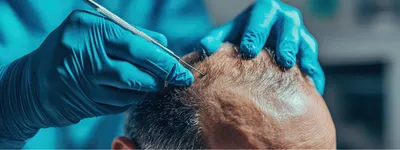
The doctor takes a few tiny punch samples of tissue from the back of the scalp, where hair is typically more resistant to thinning.
These samples are processed in a special device to create a solution containing regenerative cells and growth factors.
The solution is then injected into the areas of thinning hair.
The appointment is generally straightforward and takes about 30 to 60 minutes.
Most people can go home the same day and return to normal activities soon after, although the scalp may feel mildly sore or tender for a short time.
Your clinician will explain aftercare, expected results, and whether the treatment is being used on its own or alongside a hair transplant.
What happens during a Regenera Activa treatment session?
A Regenera Activa session is usually done in the clinic under local anaesthetic.
The doctor takes a few tiny punch samples of tissue from the back of the scalp, where hair is typically more resistant to thinning.
These samples are processed in a special device to create a solution containing regenerative cells and growth factors.
The solution is then injected into the areas of thinning hair.
The appointment is generally straightforward and takes about 30 to 60 minutes.
Most people can go home the same day and return to normal activities soon after, although the scalp may feel mildly sore or tender for a short time.
Your clinician will explain aftercare, expected results, and whether the treatment is being used on its own or alongside a hair transplant.
Before you commit
Questions to Ask the Clinic
A reassuring clinic conversation usually becomes much clearer when you ask direct, practical questions.
When should I expect early changes, and when are fuller results usually assessed?
How long do results typically last in someone with my pattern of hair loss?
Would I likely need repeat treatment, and if so, after how long?
How will you judge whether the treatment is working in my case?
What other treatments might help maintain the benefits for longer?
You do not need to ask everything at once, but the clearest decisions usually come from the clearest questions.
When can you expect results and how long do they last?
Most people do not see an immediate change after Regenera Activa.
Early improvements are usually noticed after about 6 to 8 weeks.
Clearer changes in hair shedding, thickness, and overall quality often become more noticeable over 3 to 6 months.
Results can continue to develop for several months after treatment.
How long the effects last varies from person to person and depends on factors such as the pattern of hair loss, age, general health, and whether other treatments are used alongside it.
In many cases, the benefit can last around 12 to 18 months, after which a repeat treatment may be considered if recommended by your specialist.
Regenera Activa is best viewed as a supportive treatment that may help maintain or improve existing hair, rather than a permanent cure for ongoing hair loss.
When can you expect results and how long do they last?
Most people do not see an immediate change after Regenera Activa.
Early improvements are usually noticed after about 6 to 8 weeks.
Clearer changes in hair shedding, thickness, and overall quality often become more noticeable over 3 to 6 months.
Results can continue to develop for several months after treatment.
How long the effects last varies from person to person and depends on factors such as the pattern of hair loss, age, general health, and whether other treatments are used alongside it.
In many cases, the benefit can last around 12 to 18 months, after which a repeat treatment may be considered if recommended by your specialist.
Regenera Activa is best viewed as a supportive treatment that may help maintain or improve existing hair, rather than a permanent cure for ongoing hair loss.
Conclusion
Regenera Activa is best understood as a supportive treatment, not a stand-alone cure for significant hair loss. It may help some patients with early thinning, especially when the aim is to preserve existing hair and complement a broader plan that can include medication or transplantation.
If you are considering it, ask practical questions: what stage of hair loss do you have, what outcome is realistic, how long might benefits last, and what evidence supports its use in your case. A careful assessment by a qualified hair restoration specialist matters more than the marketing label attached to the procedure.


Article Contributors

Emin Albayrak
Writer
- Views
- 1745 views
- Reading Time
- Last Updated